Inside the Weekly Pulse: How Dinergy Governs a Multi-Dimensional Energy Ecosystem
The Founder Architect's strategic briefing reviews four critical dimensions every week — from generation performance and grid infrastructure to AI systems and tokenized finance — producing the governance spine of an increasingly complex operation.
Recorded by the Founder Architect, March 15, 2026
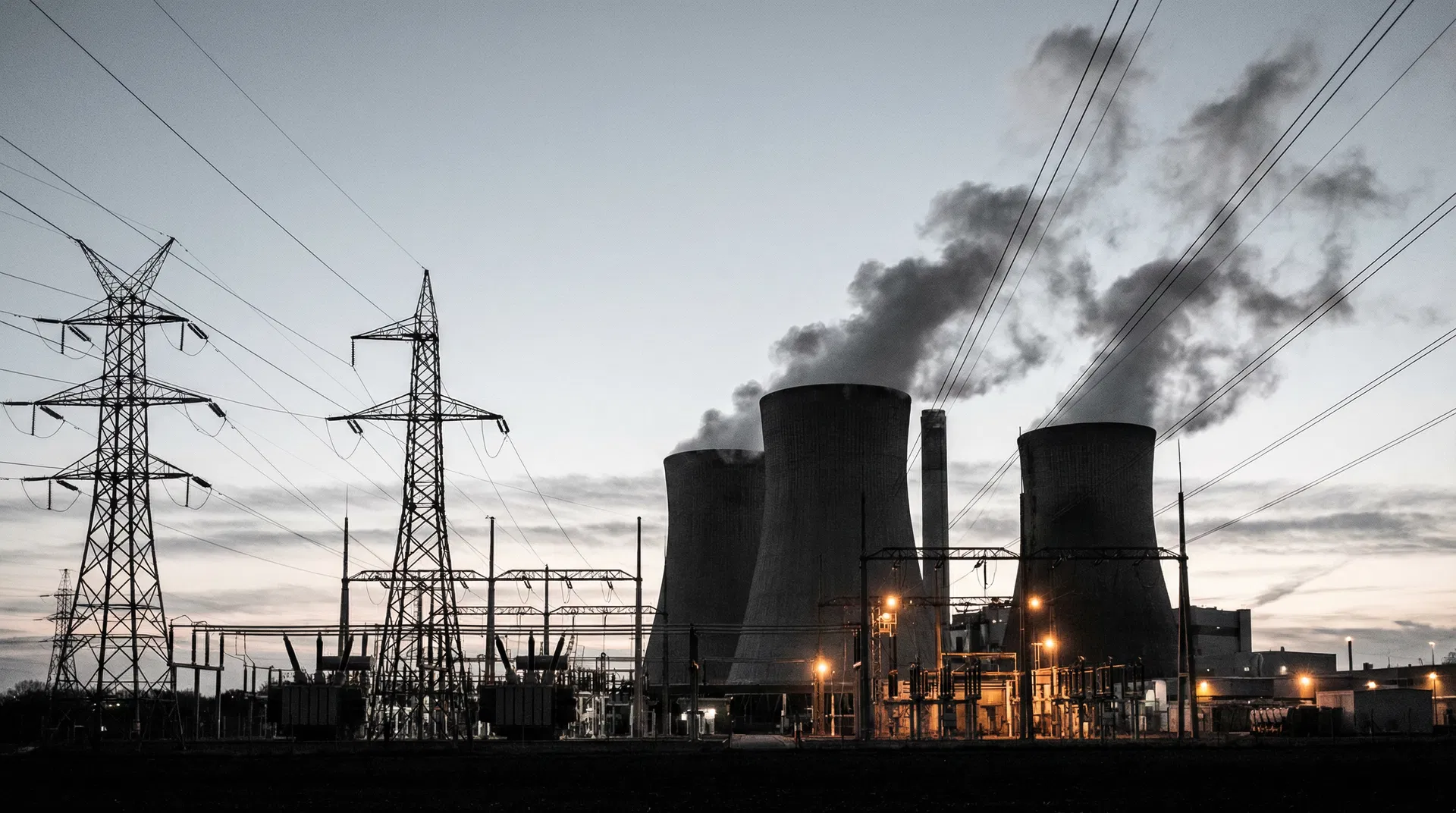
Every Monday morning, before the European energy markets open their first trading window, a small group of operational leads gathers — some in person, some via secure link — for what has become the most consequential thirty minutes in the Dinergy ecosystem. They call it the Weekly Pulse. It is not a status meeting. It is not a stand-up. It is, in the words of Founder Architect Merlin, "the governance spine" of an organization that now spans energy production, grid infrastructure, artificial intelligence, robotics, and tokenized financial settlement.
The briefing follows a strict four-dimensional review protocol. First, the system overview: energy operations teams report on generation performance, trading margins, imbalance exposure, and collateral requirements across the portfolio. Infrastructure teams follow with updates on CHP plants, transformers, grid allocations, and the growing network of sensor deployments that feed real-time data into the QDNRG platform. Technology units then summarize developments in robotics, AI agent behavior, and the RONOR platform — Dinergy's proprietary system for operational intelligence. Finance teams close the first dimension with a review of capital flows, liquidity conditions, and the state of the tokenized settlement layer.
The second dimension is the decision log review. Every strategic decision made within the ecosystem is recorded using an architectural decision record — a structured format that preserves not only what was decided, but why, by whom, and under what constraints. "This log is the institutional memory of the organization," Merlin has said. "Without it, we are making the same decisions over and over, and we don't even know it."
"Together, the dashboard snapshot, the decision log, and the action register form the governance spine of the Dinergy ecosystem." — Merlin, Founder Architect
The third dimension addresses high-risk escalations. The Pulse is designed to surface threats before they metastasize: regulatory changes that could affect grid access or trading licenses, physical grid constraints that limit generation capacity, spikes in trading exposure that exceed risk thresholds, cybersecurity incidents, and — increasingly — anomalies in artificial intelligence systems. This last category has grown in importance as Dinergy deploys more AI agents across its operations, from predictive maintenance on CHP turbines to automated trading algorithms on the QDNRG platform.
The fourth and final operational dimension is action allocation. Every action item that emerges from the Pulse must have three attributes: an owner, a deadline, and a measurable outcome. "No orphan actions," is the rule. If an action cannot be assigned to a specific person with a specific deadline, it is not an action — it is a wish.
But perhaps the most distinctive element of the Weekly Pulse is what comes after the four dimensions are reviewed. The meeting closes with a single question, posed to every participant: "Did any artificial intelligence output surprise you this week?" If the answer is yes, the event is logged and investigated. This AI trust check, as it is known internally, reflects Dinergy's philosophy that artificial intelligence should be a governed tool, not an autonomous authority. The question is simple. Its implications are profound.
The Weekly Pulse produces three artifacts: a dashboard snapshot that captures the state of the ecosystem at the moment of review, an updated decision log that preserves the week's strategic choices, and an action register that tracks every commitment to completion. Together, these three documents form the governance record of an organization that is building something few have attempted — an integrated energy ecosystem where electrons, data, robots, and capital all flow through a single operational framework.